Archives
-
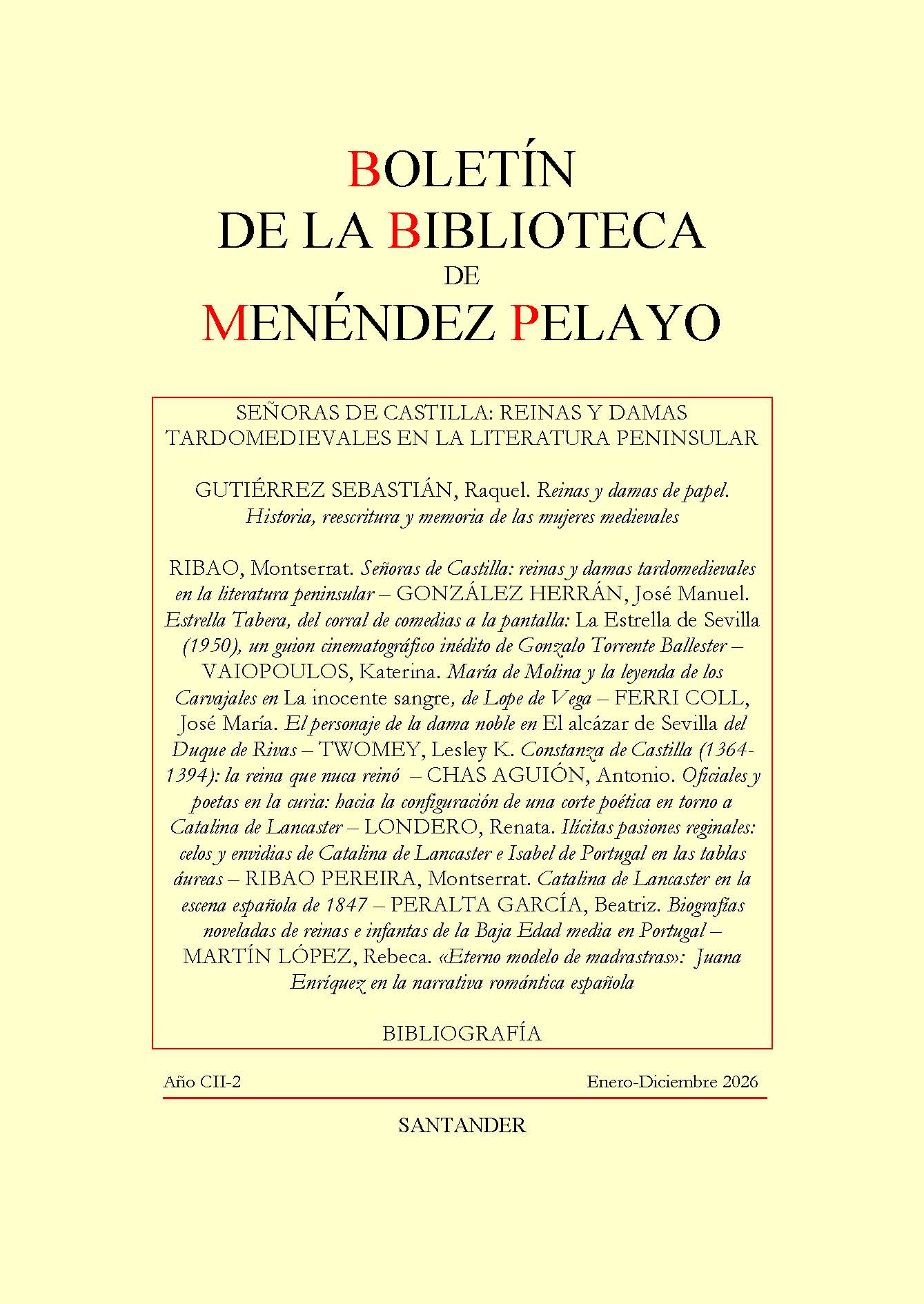
Señoras de Castilla: reinas y damas tardomedievales en la literatura peninsular
Vol. 102 No. 2 (2026)Many of the female proper names that have reached us from the Middle Ages do so through the reinterpretations they have undergone over the centuries. Queens, their courtly circles, favorites, and noblewomen vying for power or falling victim to the intrigues in which they participate constitute central themes of interest in Spanish literary history. From chronicles to contemporary neo-medievalism, late medieval ladies have been mutable symbols: guarantors of dynastic legitimacy, tragic victims of power, or emblems of resistance and political agency. Their presence is not solely a response to historical evocation, but rather to a continuous dialectic between past and present, where literature acts as a space for negotiating female authority. Within the current framework of cultural and gender studies, these figures also offer fertile ground for re-examining the literary history of Spain from a perspective that combines textual analysis, political theory, and cultural memory. In this sense, Señoras de Castilla: reinas y damas tardomedievales en la literatura peninsular analyzes, from a broad perspective, both chronological and aesthetic, generic and methodological, the representation and literary relevance of queens and ladies of the Late Middle Ages in peninsular literature, produced from the 15th century to the present.
-
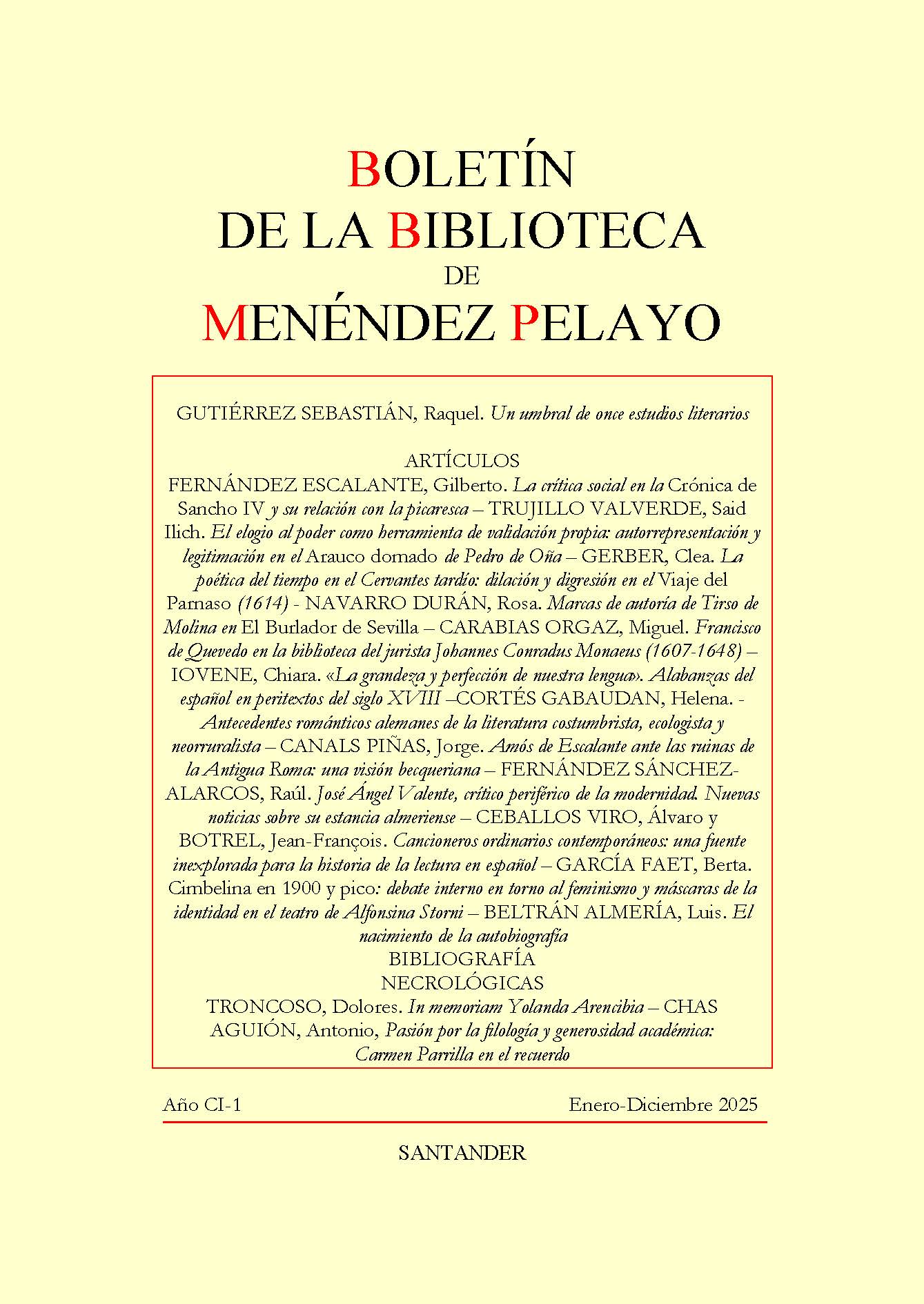
Ordinario
Vol. 101 No. 1 (2025)The articles in this issue cover a wide range of topics, from literary theory to sociopolitical interpretations of literary works, from the reconstruction of moments in cultural or literary history based on the consultation and recovery of unpublished documents to rereadings and theories on authorship. The time frame is also very broad: articles on medieval literature, studies of Golden Age literature, the 18th, 19th, and 20th centuries, and contemporary texts are all included.
-
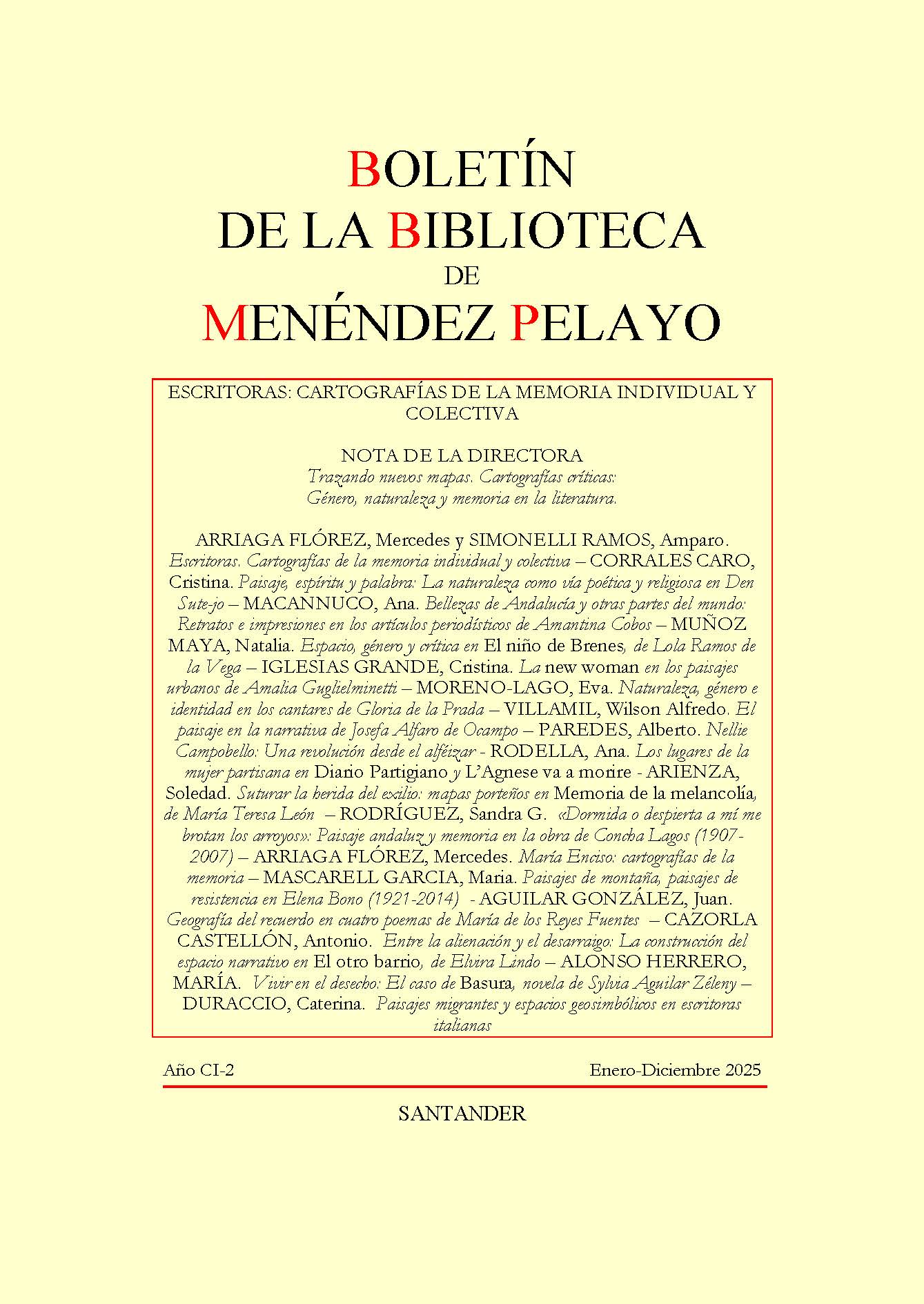
Women Writers: Cartographies of Individual and Collective Memory
Vol. 101 No. 2 (2025)This volume of the Boletín de la Biblioteca de Menéndez Pelayo constitutes a meeting place for diverse critical traditions that, nonetheless, converge on a common goal: rethinking literature as a symbolic territory traversed by gender, nature, and memory. The articles presented here, dedicated to different authors and contexts, trace a plural map where words become instruments of resistance, identity construction, and the reappropriation of space.
-

Homenaje a Luis Beltrán Almería
Vol. 101 No. 3 (2025)To do justice to art—that could be the motto emblazoned on the intellectual shield of Luis Beltrán, for this professor, this friend, this mentor, to whom we dedicate the second monograph of the Boletín de la Biblioteca de Menéndez Pelayo for the year 2025, has devoted his academic life and efforts to the comprehensive theorization and revision of literary art.
To do justice to Luis. To thank him for his dedication, work, teaching, and friendship—that is the objective that a group of friends, colleagues, and students had when they proposed to this century-old journal the publication of the monograph that follows this introduction.
The journal had undoubtedly accepted this proposal for several reasons. Luis is one of the great theorists of contemporary literature. Luis has collaborated on many occasions with the Menéndez Pelayo Society, the organization that promotes this journal, in publications, conferences, and joint research endeavors, including an article in this year's regular issue. And, why not say it, the author of this piece would like to: consider herself in some way a disciple of his teachings, a friend, and above all, an admirer of an independent intellectual who has forged his own unique way of thinking, one that aspires to understand and explain art.
Luis Beltrán's value as a literary theorist is undeniable, but it is magnified even further when we consider his independent spirit, his immense humanity, and his singularity as both a person and a scholar.
These are all great virtues that were also present in Marcelino Menéndez Pelayo: a capacity for reading, an indomitable spirit—clearly at the ideological opposite of Beltrán's—an uncomfortable presence for those who follow doctrines without thinking or questioning, and a desire to construct a system for explaining art, a new aesthetic.
-
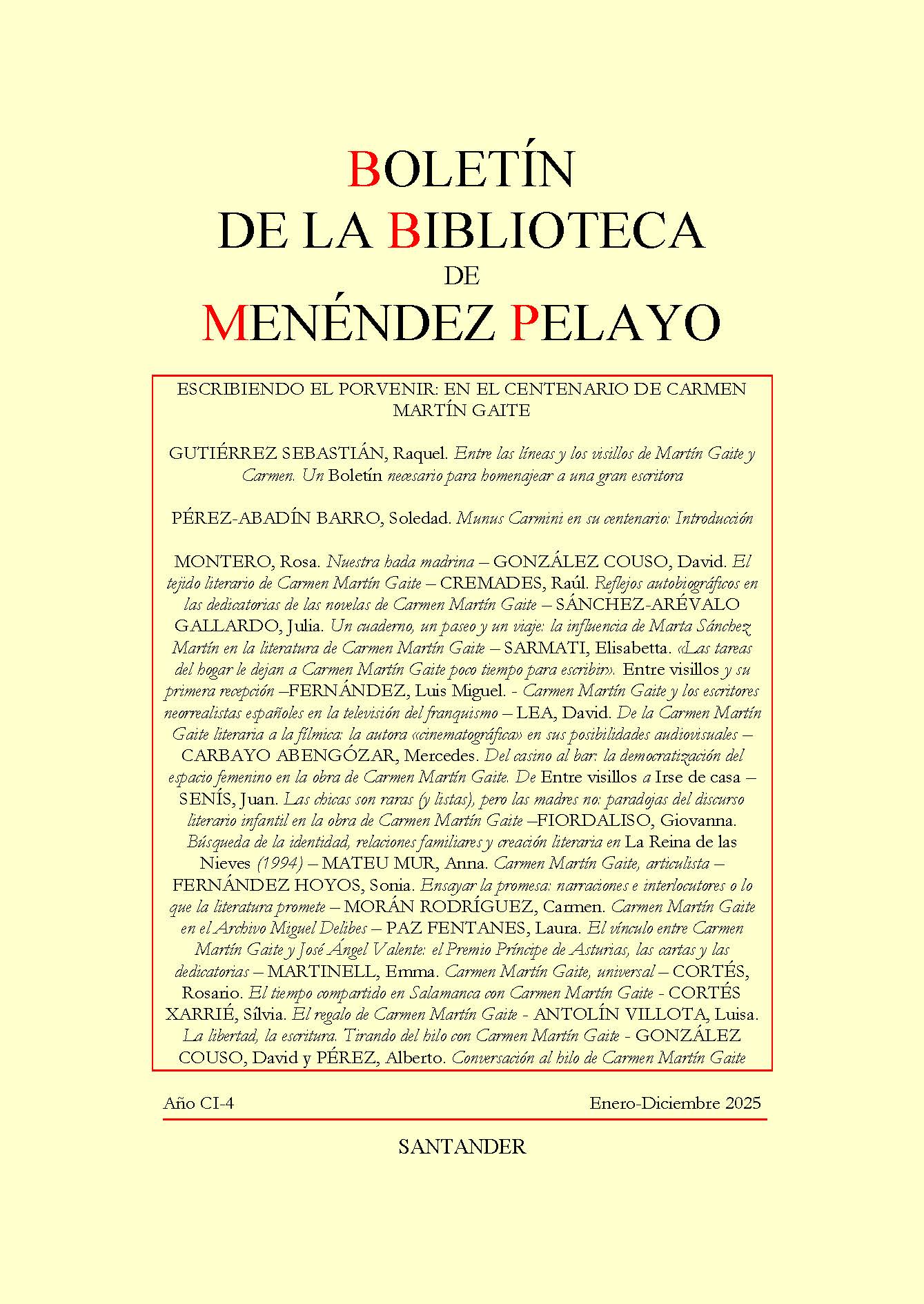
Writing the future: on the centenary of Carmen Martín Gaite
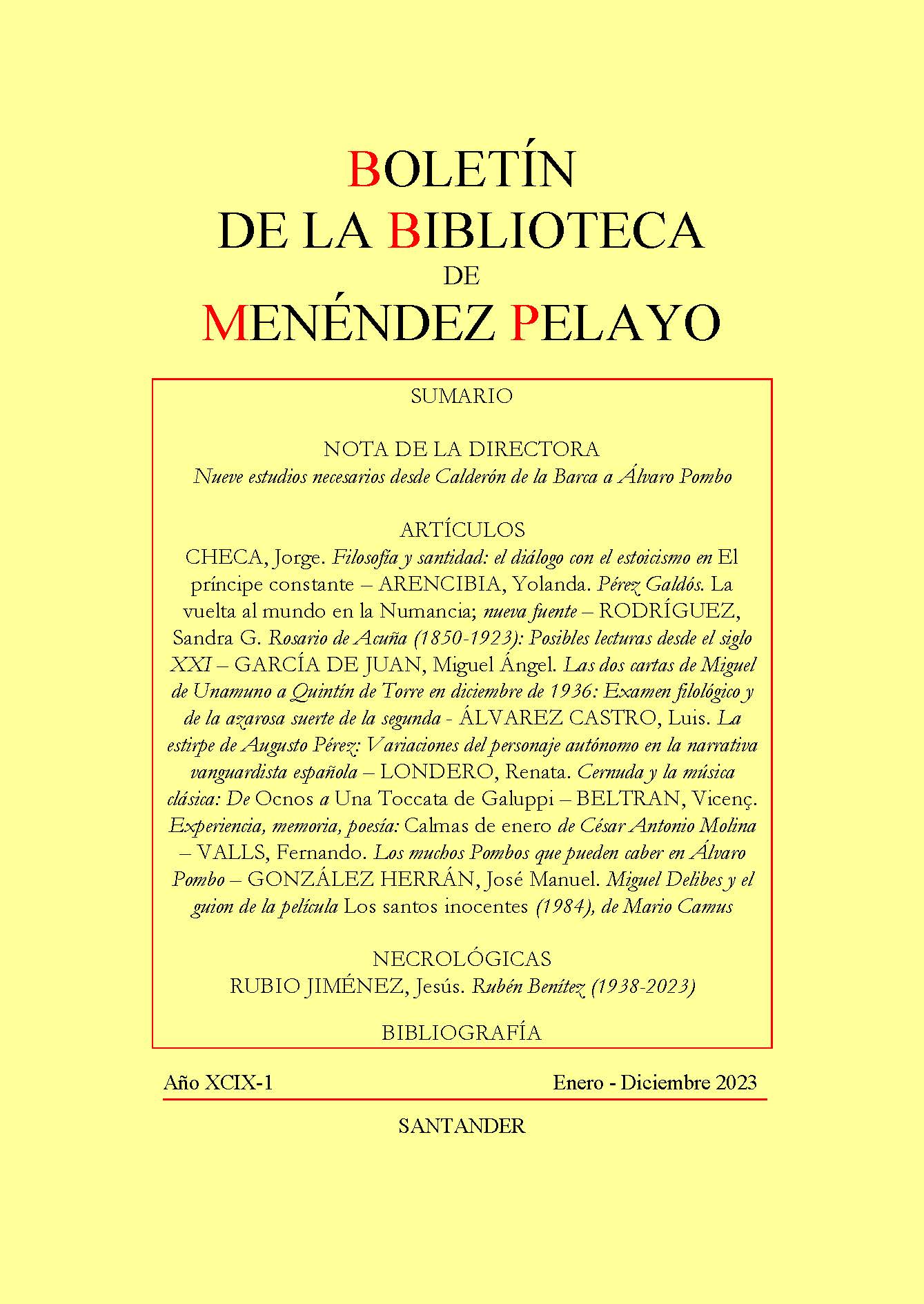
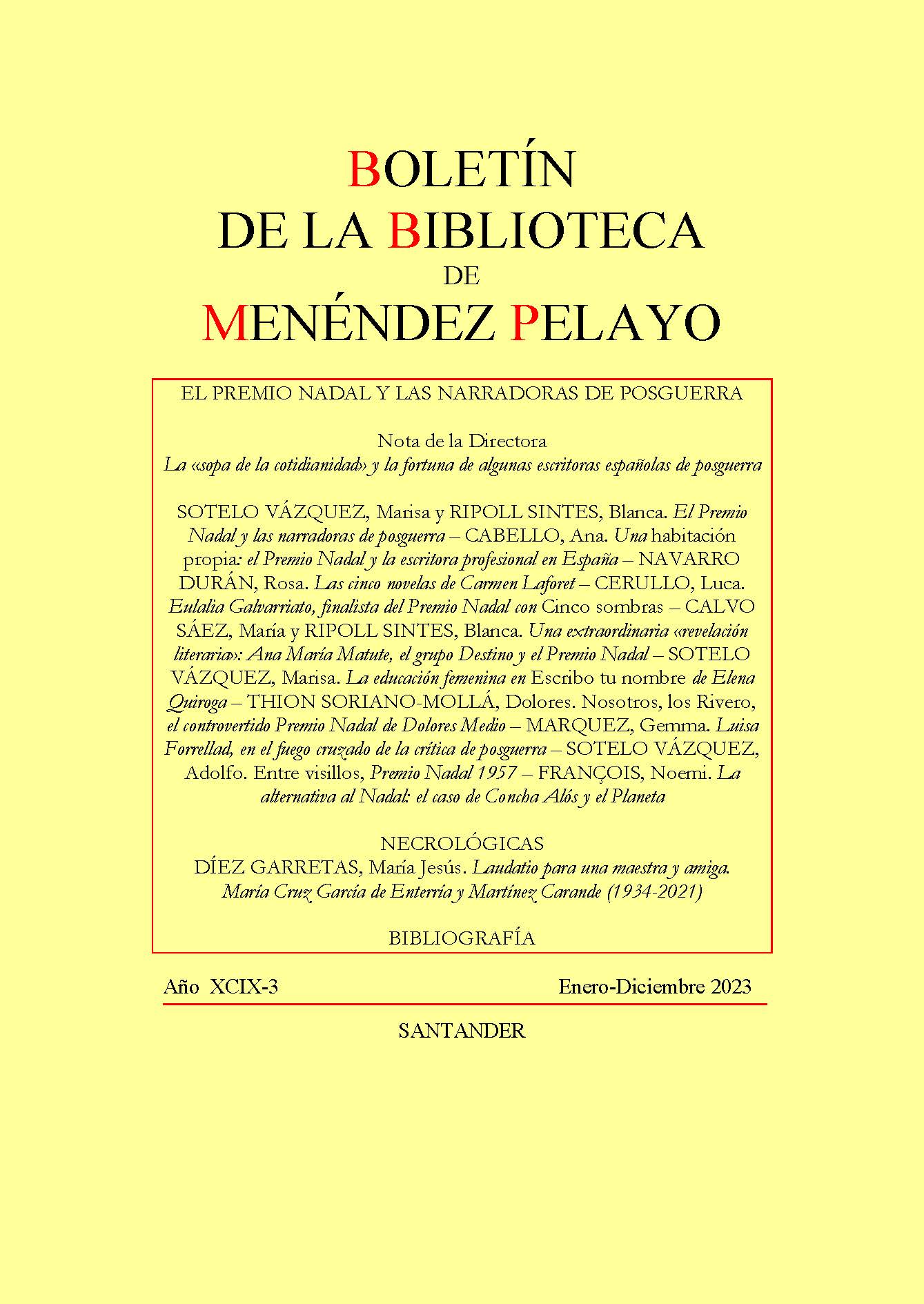
Vol. 101 No. 4 (2025)The story of this special issue of the Bulletin of the Menéndez Pelayo Library, dedicated to the writer Carmen Martín Gaite (1925-2000), began when Soledad Pérez-Abadín and David González Couso proposed that we pay tribute to this pivotal figure in Spanish literature on the centenary of her birth. Until that point—let's say more than a year ago—our journal had not published any studies on the Salamanca-born writer other than Adolfo Sotelo's excellent article, "Between Curtains, Nadal Prize 1957," published in the special 2023 issue, in which several researchers reviewed the Nadal Prize and postwar narrative. In his work, Professor Sotelo meticulously analyzed the literary, media, and publishing context surrounding the awarding of the Nadal Prize to Carmen Martín Gaite's novel *Entre visillos*. He reconstructed the events leading up to the award and examined the close relationship between the author and the Destino publishing group, with particular emphasis on the publisher's crucial role as a cultural platform in post-war Spain. Given the issue the reader now holds, whether by turning pages or clicking on a computer screen, this article could be considered a "prequel" to this volume. It presents a comprehensive approach, exploring the various intellectual and personal facets of Carmen Martín Gaite—varied and fascinating topics previewed in the volume's prologue by its coordinator, Soledad Pérez-Abadín, who invites us to delve into these valuable works.
-
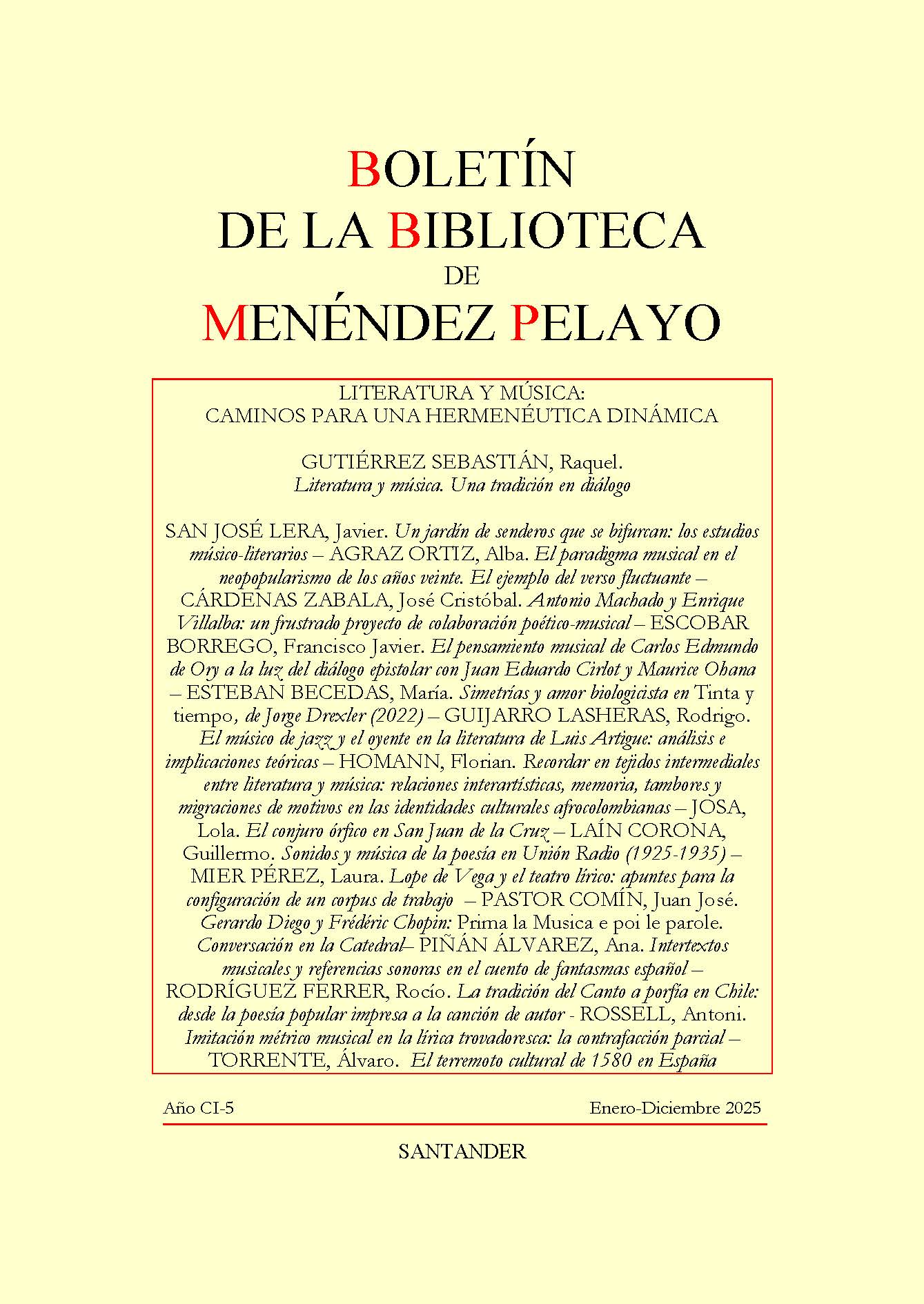
Literature and music: paths to a dynamic hermeneutics
Vol. 101 No. 5 (2025)Since its founding in 1919, the Boletín de la Biblioteca de Menéndez Pelayo has been a privileged space for the study of Spanish literature in its historical, aesthetic, and cultural dimensions. Within this framework, the relationship between literature and music has occupied a constant, though never exclusive, place, articulated around a conception of the literary that recognizes its oral origin, its temporal nature, and its dependence on rhythmic and sonic forms. This perspective directly refers to the thought of Marcelino Menéndez Pelayo and, especially, to his Historia de las ideas estéticas en España, a work in which the scholar from Santander repeatedly emphasized the kinship between poetry and music as arts that develop over time and seek an internal harmony of their elements.
Menéndez Pelayo's conceptual framework, inscribed in a classicist and normative aesthetic ideal, presents, from a contemporary perspective, evident limitations for addressing aesthetics marked by dissonance, fragmentation, or sonic experimentation. However, his reflection opened a horizon of analysis that allowed us to consider literature as an aesthetic phenomenon embedded in a broad cultural tradition and in dialogue with other arts. This horizon has accompanied, explicitly or implicitly, the trajectory of the BBMP, which has successfully extended it and subjected it to critical review for over a century.
It is within this context that the monographic volume Literature and music: paths to a dynamic hermeneutics (CI-5, 2025) is situated, constituting a significant contribution to the intellectual trajectory of the Boletín de la Biblioteca de Menéndez Pelayo and, at the same time, a critical update of its theoretical foundations. The fifteen works it comprises traverse, from an intermedial and interdisciplinary perspective, a broad historical and cultural arc that ranges from troubadour lyric poetry and sung poetry of the medieval and Golden Age traditions to contemporary literature, encompassing neopopularism, the avant-garde, the Silver Age, and modern forms of mediated orality. This volume explores the relationship between word and music through studies on metrical-musical imitation and counterfaction, on poetry and songbooks, on the structural presence of music in modern lyric poetry, and through analyses of operatic librettos, opera, and musical theater as literary genres. Alongside these historical and formal approaches, it includes works dedicated to poetry in dialogue with flamenco and jazz, to the interactions between literature, radio, and the cultural industry, to the role of music in fantastic narratives, and to Afro-diasporic traditions, sound performance, and the politics of memory. Taken together, the collected studies demonstrate how music can function as a structuring principle of the literary text and as a situated cultural practice, linked to processes of transmission, identity, and aesthetic experience, reaffirming the relevance and critical productivity of the dialogue between literature and music in contemporary literary studies.
-
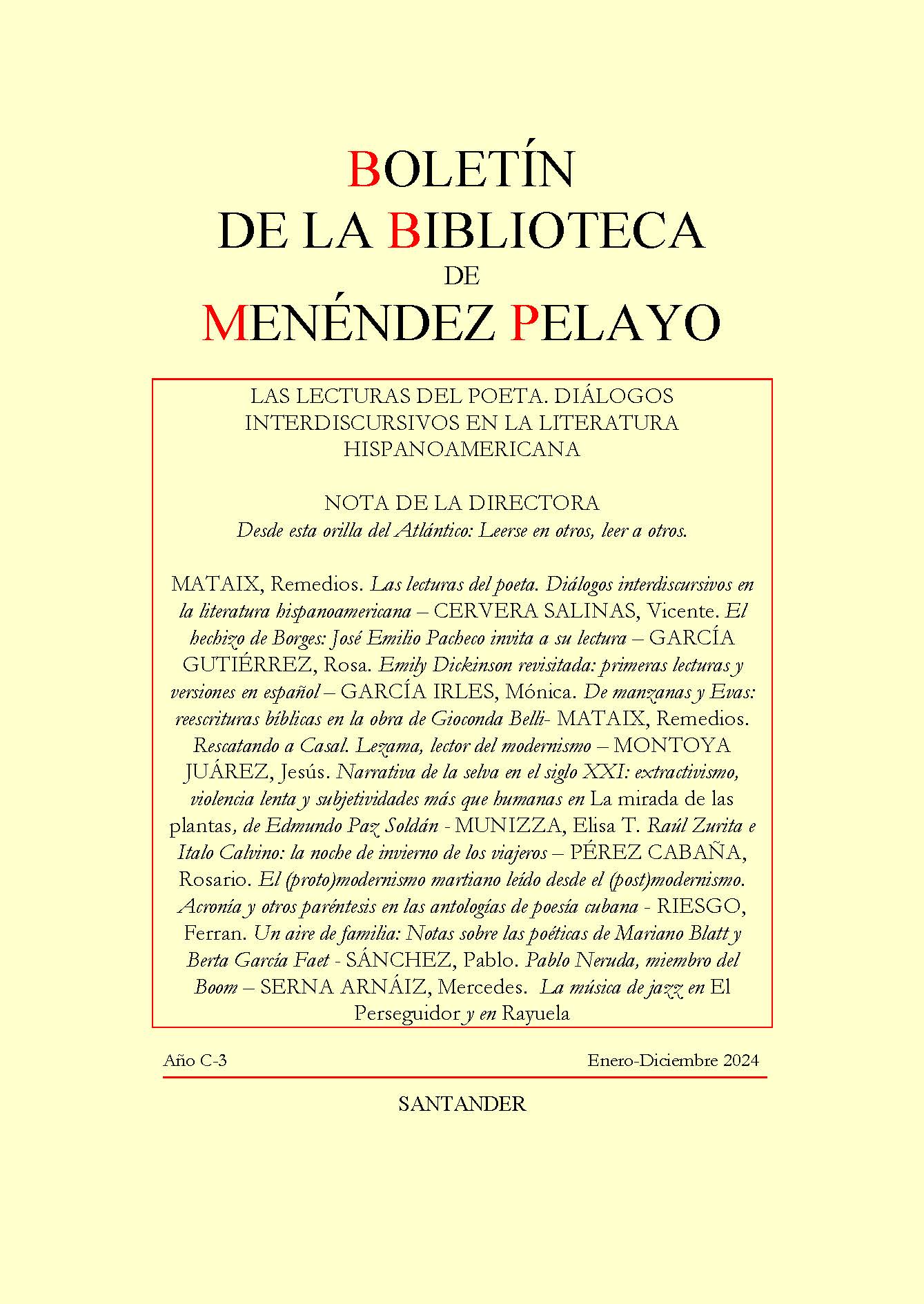
Las lecturas del poeta. Diálogos interdiscursivos en la literatura hispanoamericana
Vol. 100 No. 3 (2024)
1-25 of 33
Next