Vol. 102 No. 2 (2026): Señoras de Castilla: reinas y damas tardomedievales en la literatura peninsular
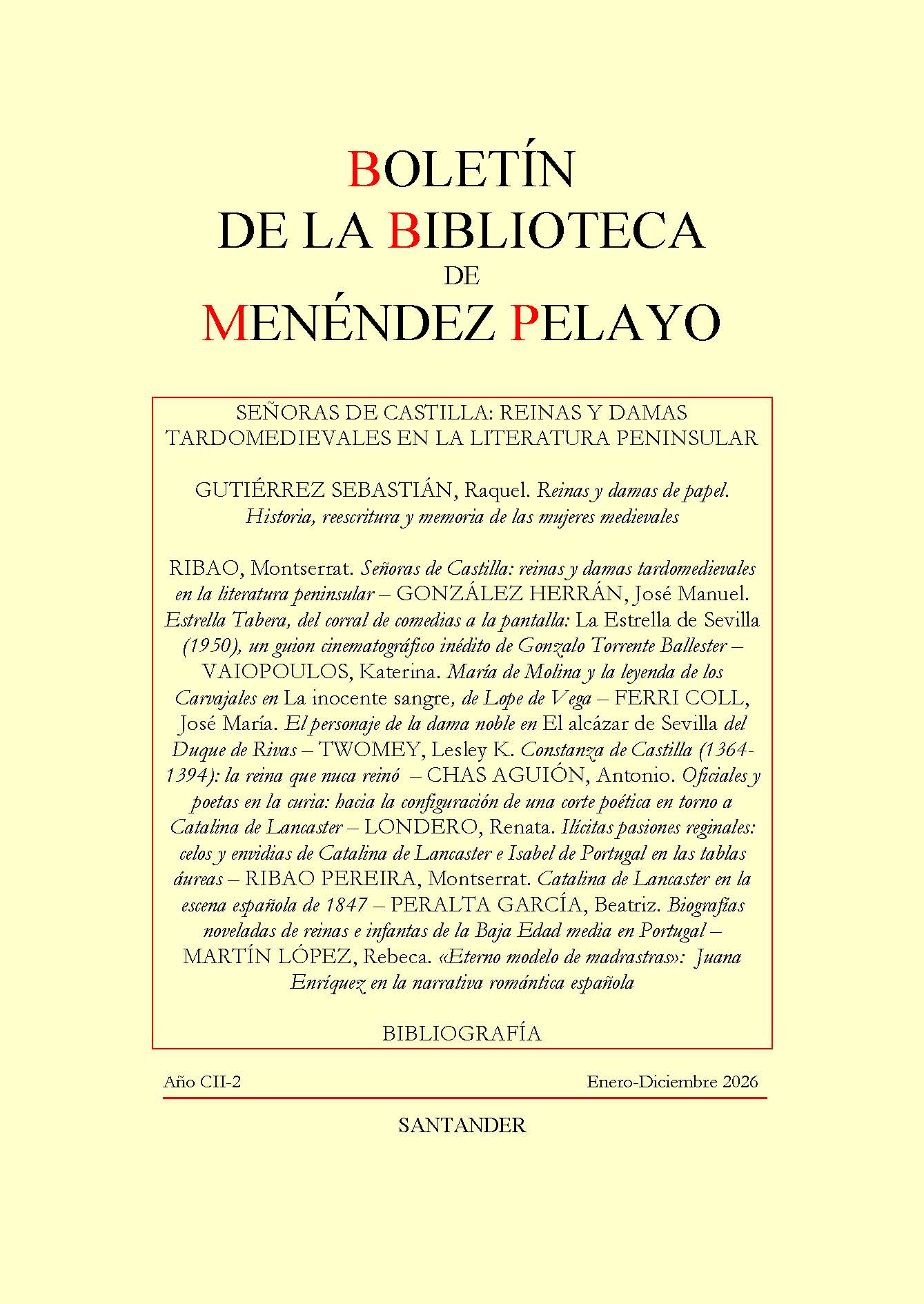
Many of the female proper names that have reached us from the Middle Ages do so through the reinterpretations they have undergone over the centuries. Queens, their courtly circles, favorites, and noblewomen vying for power or falling victim to the intrigues in which they participate constitute central themes of interest in Spanish literary history. From chronicles to contemporary neo-medievalism, late medieval ladies have been mutable symbols: guarantors of dynastic legitimacy, tragic victims of power, or emblems of resistance and political agency. Their presence is not solely a response to historical evocation, but rather to a continuous dialectic between past and present, where literature acts as a space for negotiating female authority. Within the current framework of cultural and gender studies, these figures also offer fertile ground for re-examining the literary history of Spain from a perspective that combines textual analysis, political theory, and cultural memory. In this sense, Señoras de Castilla: reinas y damas tardomedievales en la literatura peninsular analyzes, from a broad perspective, both chronological and aesthetic, generic and methodological, the representation and literary relevance of queens and ladies of the Late Middle Ages in peninsular literature, produced from the 15th century to the present.
Published:
2026-06-15